A wireless microphone is an unforgiving battery application. A bodypack or handheld transmitter must generate an RF carrier continuously, respond to audio peaks in microseconds, encrypt the stream on professional systems and drive a backlit display - usually from just two AA cells. When the battery sags at the wrong moment, the result is not a graceful fade but a low-battery warning, a muted channel or an on-stage dropout that the audience hears immediately. This guide explains the real electrical load a wireless mic presents, why properly specified nickel-metal hydride (NiMH) AA cells have become the default for rental inventories, touring acts and installed systems, and the one compatibility trap - the transmitter's low-voltage cutoff - that decides whether rechargeables actually deliver their rated runtime. It closes with how an OEM cell and pack supplier specifies and matches NiMH for pro-audio use.
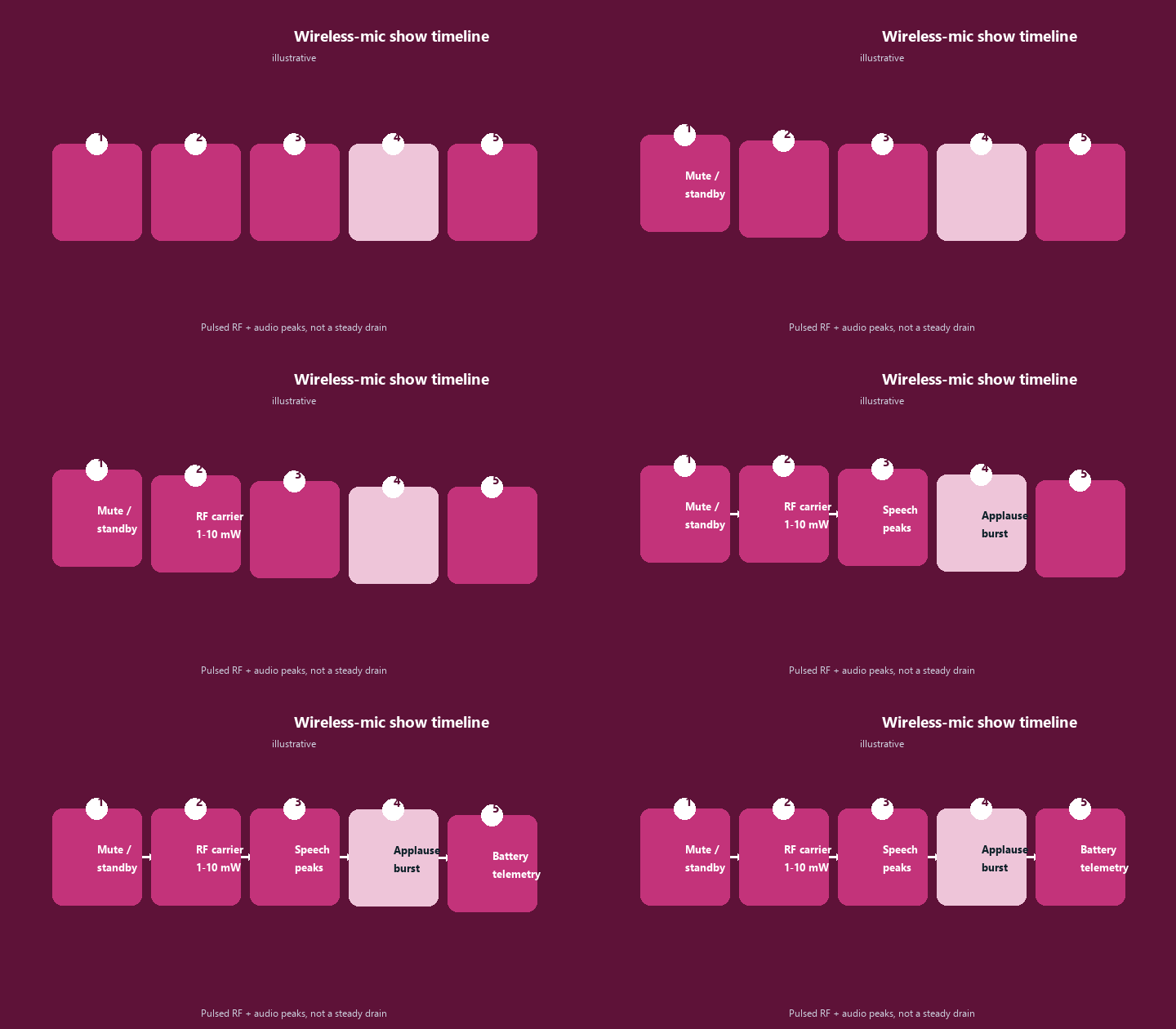
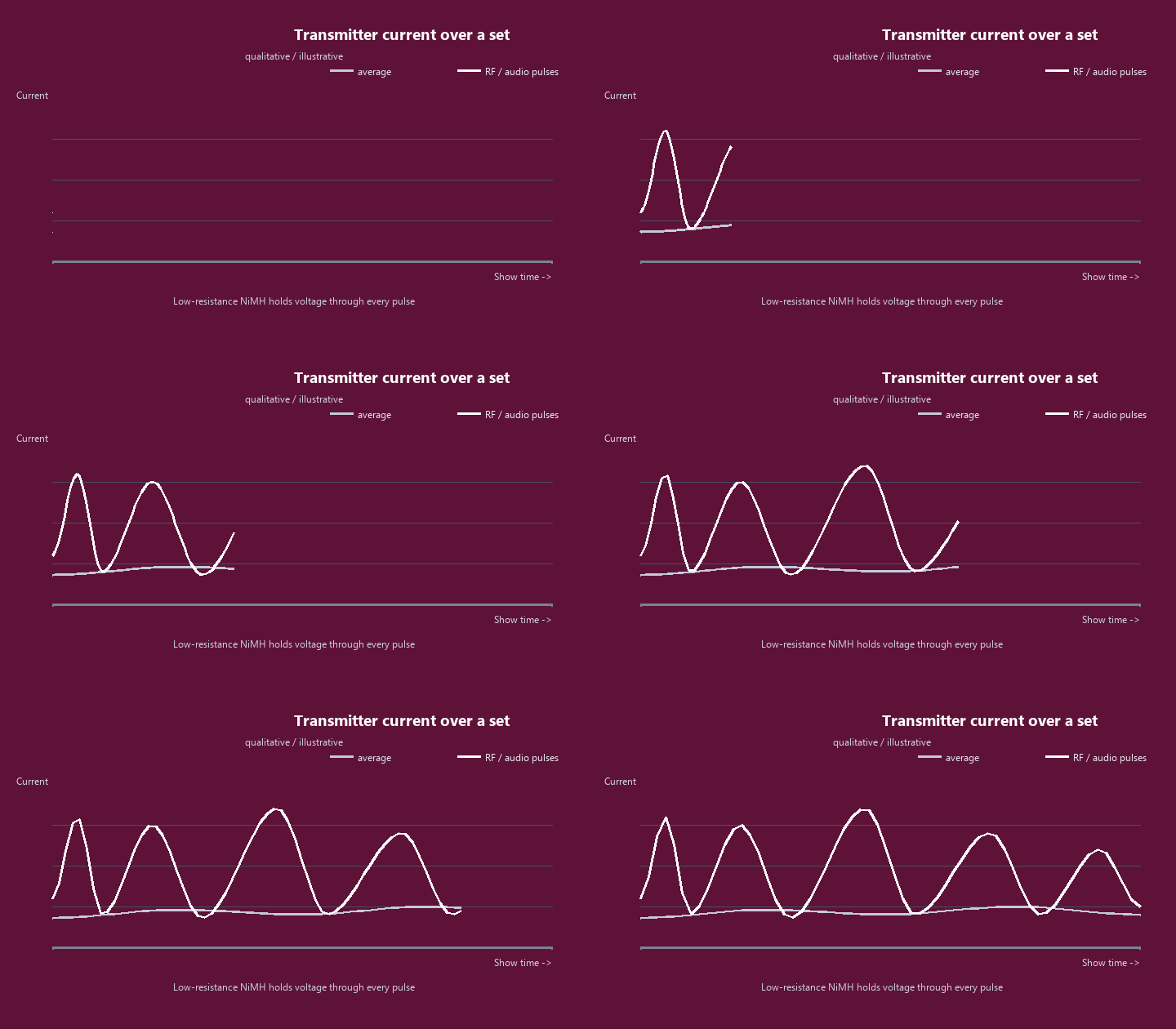
A transmitter is not a flashlight. Its current draw is a low standby baseline punctuated by short, high-amplitude events: the RF power amplifier keying on as the channel is active, the digital transmitter sending packets or frequency-agile bursts, and momentary audio peaks that drive the encoder and modulator. On a digital handheld the RF output is commonly user-selectable for regulatory reasons - Shure, for example, specifies 1 mW or 10 mW on its QLX-D and SLX-D systems - and the high-power setting materially shortens runtime.
Manufacturer runtimes make the energy budget concrete. Shure rates the SLX-D transmitters for up to about 8 hours from two AA cells and the QLX-D family for up to about 9 hours on two AA alkaline cells, with an optional dedicated lithium-ion pack extending the latter to roughly 10 hours. Those are favourable, well-engineered numbers, but they are measured under defined RF power and duty conditions. A multi-channel rack running at high RF power in a busy RF environment, with backlit displays and frequent metering, will trend toward the lower end of the range, which is why working sound companies plan for a safety margin rather than the headline figure.
Two electrical properties matter more than the mAh printed on the cell: internal resistance under pulsed load, and the shape of the discharge voltage curve. The battery that wins in a wireless mic is the one that holds its terminal voltage through thousands of small current spikes across an entire performance, not simply the one with the largest capacity on a slow benchmark drain.
A fresh alkaline AA starts near 1.5 V and its voltage slides downward almost from the first minute. Under the pulsed load of a transmitter that slope steepens, and internal resistance rises as the cell is consumed, so the mic sees progressively deeper sags. Alkaline cells are convenient and have a long shelf life, which is why manufacturers use them for published runtime, but in high-use fleets their single-use economics and their tendency to leak as they age are real costs.
Primary lithium AA cells (Li-FFeS2 chemistry, 1.5 V) hold a high, flat voltage for most of their life, are very light and have an excellent shelf life, making them a strong choice for one-off or emergency use; they are, however, expensive and are themselves disposable.
Modern NiMH AA cells are nominally 1.2 V and behave almost the opposite of alkaline: they hold a flat plateau close to their nominal voltage through roughly 90% of usable capacity and then fall quickly at end of life. Quality high-drain NiMH uses low-resistance separators and current-collector designs, so the terminal voltage barely moves during an RF or audio pulse. Common professional-grade AA NiMH capacities run from roughly 1,900 to 2,700 mAh; the exact figure should be chosen together with internal resistance and cycle life rather than maximised in isolation. For an organisation that turns over dozens of transmitters every week, the ability to recharge the same cells hundreds of times - with no disposal cost and no leak risk - is usually decisive.
Here is the most common - and most avoidable - complaint about rechargeables in wireless mics: 'I put in fully charged NiMH cells and the transmitter shows half battery after ten minutes.' This is almost always a cutoff-voltage mismatch, not a defective cell.
A transmitter decides its battery icon from terminal voltage, and engineers set a low-battery threshold to protect against the steep end-of-life sag of alkaline cells. A unit designed around alkaline may warn or shut down anywhere from roughly 1.1 V to 1.2 V per cell. Because a NiMH cell spends its whole life around 1.2 V, a high-threshold mic interprets a perfectly healthy NiMH plateau as 'already low' and can leave 30-50% of the usable charge untapped. Transmitters designed or menu-configured for rechargeables follow the NiMH curve down toward 1.0 V (some to about 0.9 V) before warning, and these extract essentially full capacity.
The practical specification step is simple: before standardising on NiMH, test the specific transmitter model. Run a known-good, fully charged low-resistance NiMH pair under real RF power and confirm the low-battery threshold, the displayed metering and the actual time to shutdown. Most current professional handhelds and bodypacks work very well with NiMH; a smaller number of older or budget units with conservative thresholds are better left on lithium primaries. Documenting this per model avoids a lot of mistaken 'bad battery' reports.
Once the cutoff is confirmed, fleet sizing is an inventory and rotation problem. Count the transmitters in service, multiply by two cells, then add a fully charged spare set for every active unit and a sensible buffer for multi-day events and ageing stock. Rental houses commonly hold two to three times the cell count of their transmitter count so that every show starts on fresh cells and discharged sets rotate straight to chargers.
Choose the cell grade for the duty: low-self-discharge (LSD) NiMH is the right default for hire stock and installed systems because cells can sit pre-charged on a shelf for a month or far longer and still be ready, while the highest-capacity standard NiMH grades suit teams that recharge after every single use and want maximum runtime. Buy cells matched in batches and always operate them as matched pairs - two cells in series must age together; mixing a strong cell with a weak one drags the pack down and stresses the weak cell.
Charging discipline protects the investment. Use a charger that terminates on the accepted NiMH signals - negative delta-V (-dV/dt), zero delta-V plateau or temperature rise (dT/dt) - and that switches to a small maintenance or trickle current rather than cooking cells indefinitely. Dedicated multi-bay pro-audio chargers and conditioners add per-cell monitoring and refresh cycles, which is why large inventories standardise on one cell and one charger platform.
On show day the workflow is deliberately boring: start every transmitter on a known-good matched set, log the set, keep labelled spare sets at the desk, and change cells on a schedule rather than waiting for the icon. Because NiMH gives little warning once it leaves the plateau, scheduled replacement is far safer than chasing the battery bar.
Between jobs, store NiMH cool and at a partial-to-full charge rather than baking them in a hot truck or leaving them in a powered charger for weeks. NiMH tolerates topping up and does not need the deliberate full discharge that old nickel-cadmium packs required; the so-called memory effect is largely a non-issue in modern NiMH, though an occasional controlled refresh on a conditioning charger can restore a pack that has been shallow-cycled for a long time. Avoid the genuine failure modes: mixing cells of different age, capacity or chemistry; soldering directly to consumer AA cells (heat damages seals); running visibly damaged or overheating cells; and using generic chargers that overcharge.
Cold venues slightly reduce available capacity and raise internal resistance, so outdoor winter events warrant fresh full cells and closer spare coverage; heat accelerates self-discharge and ageing. None of this is exotic - it is the difference between a fleet that is invisible and reliable and one that causes a front-of-house panic.
For microphone brands, wireless-system manufacturers, rental companies and distributors buying at volume, the right move is to specify the cell rather than take whatever a generic retail cell offers. Relevant parameters are internal resistance under pulsed current, capacity consistency within a batch, the discharge curve at the transmitter's actual current, low-temperature behaviour, self-discharge rate, cycle life and leakage/vent safety.
Sealed NiMH cells and batteries are characterised under IEC 61951-2, with safety addressed by IEC 62133-2 and transport by the UN 38.3 / IEC 62281 regime; an OEM partner should supply performance and safety documentation rather than only a datasheet marketing number. Beyond AA cells, pro-audio products frequently need matched AA and 9V line-up, welded packs with tabs and leads, custom shrink and labelling, and charger co-validation so that termination and thermistor behaviour match the pack.
Specifying against the measured duty cycle - the RF power setting, the audio peak current, the desired runtime margin and the cutoff threshold of the host transmitter - yields a cell that holds its voltage through the entire set and a fleet that can be recharged for years.
Weijiang Power supplies sealed nickel-metal hydride cells and matched packs for consumer and professional products - high-drain AA and AAA cells for wireless audio, low-self-discharge 9 V (6HR61) blocks, and tabbed Sub-C cells welded into cordless-tool, appliance and RC packs. We support OEM, ODM and private-label partners with IEC 61951-2 performance files, IEC 62133-2 safety evidence, UN 38.3 / IEC 62281 transport documentation, pulse-load and capacity matching, and charger/pack co-validation. Tell us your duty cycle, peak current, cell or pack format, autonomy target and the standards your product must meet, and our engineers will specify a matched cell-and-pack combination. Review the range on the products page.


